


Share this on...
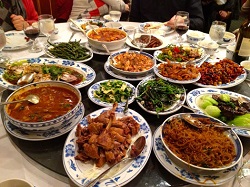

But we can be forever grateful for Susan, whoever Susan even is, that the Lazy Susan has become a staple, along with rice and spareribs, at Chinese restaurants and in homes, around the world. We could leave the story at that… but, then it really wouldn’t be much of a story, would it? So, let’s find out what we can about Susan, and “her” amazing invention, the Lazy Susan.
History of the Lazy Susan

What caused the name change from “dumbwaiter” to “Lazy Susan”? A popular theory suggests that servants were often named Susan, so that “Susan” came to be almost a synonym for “servant,” and the “Lazy Susan” was essentially functioning as a servant who never had to go anywhere (hence “lazy”). Another theory suggests that the name derives from a specific inept servant named Susan. Interesting as those stories are, there is no hard evidence to support either of them. The era of servants in most homes had ended long before the term “Lazy Susan” came into use, and, as you might expect, there is no evidence that most female servants were named Susan.
Please spin the dishes my way!
Humbly submitted for your consumption,
—Mee Magnum (“Chop! Chop!”)